This One Pot Lasagna recipe is a great, easy way to get a lasagna fix. It’s all made in one pot (well, pan….) complete with layers! Aren’t you just dying to know how it’s made? 🙂
One Pot Lasagna – with layers!
“OMG, it actually has layers in it!”, my friend exclaimed when I served up this lasagna. YES, this does!
Have you seen one-pot lasagnas floating around on the internet? I think Martha Stewart started the craze. Here’s the thing though. All the ones I’ve seen don’t look like a real lasagna with layers. They are more like a pasta bake with a delicious mess of broken up lasagna sheets mixed up with the filling and sauce.
So, cutting to the chase – here’s a snapshot of how I make this! The lasagna is made by using dried lasagna sheets, broken as needed, sliding them under the meat sauce in the same skillet it’s cooked in, then covering in more lasagna sheets. The sauce is a bottle-shake job, no cooking required, and the creamy layer is ricotta!
Upgraded recipe with two optional extras
I first published this recipe in 2015, and over the course of the past 11 years found that I started tweaking it (yes, I take liberty with my own recipes! 🥰). It evolved to this version I make today and in recent months I received such enthusiastic reviews I felt it was time to update the recipe.
Firstly, I upgraded it from a simple 2 layer lasagna to a 3 layer one, which does call for the need to remove half the filling into a bowl. It felt like a small effort for the satisfying look of 3 distinct layers, it became the default way I make this.
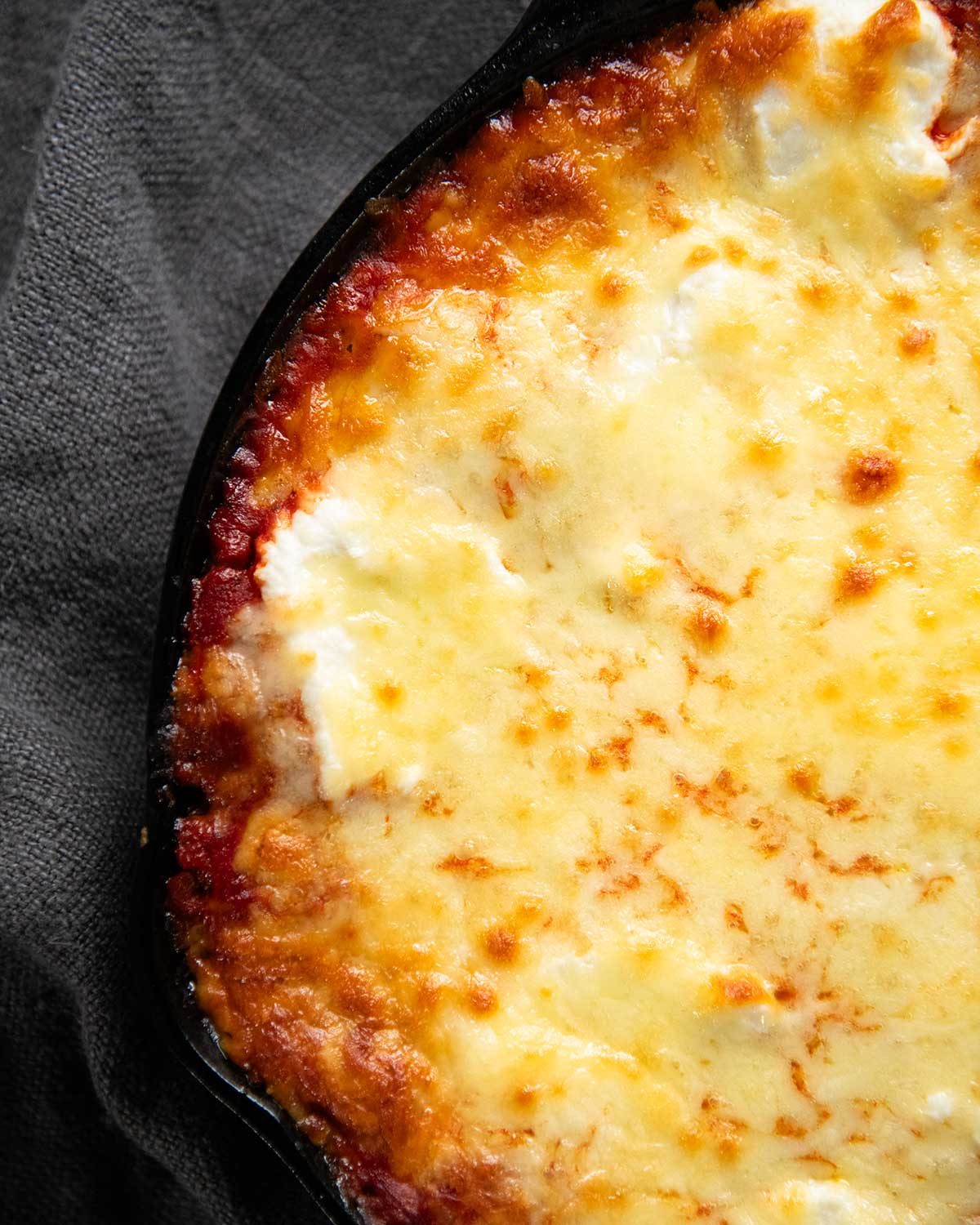
And secondly, I missed the cheese sauce on the top. So I started playing with different ways to make a faux simple cheese sauce, and found that by simply whisking up some ricotta – which loosens it into almost like a whipped cream – it melts into a flood of creamy goodness under the layer of mozzarella, and voila! Creamy cheese sauce vibes, with barely any effort!!
Ingredients in One Pot Lasagna
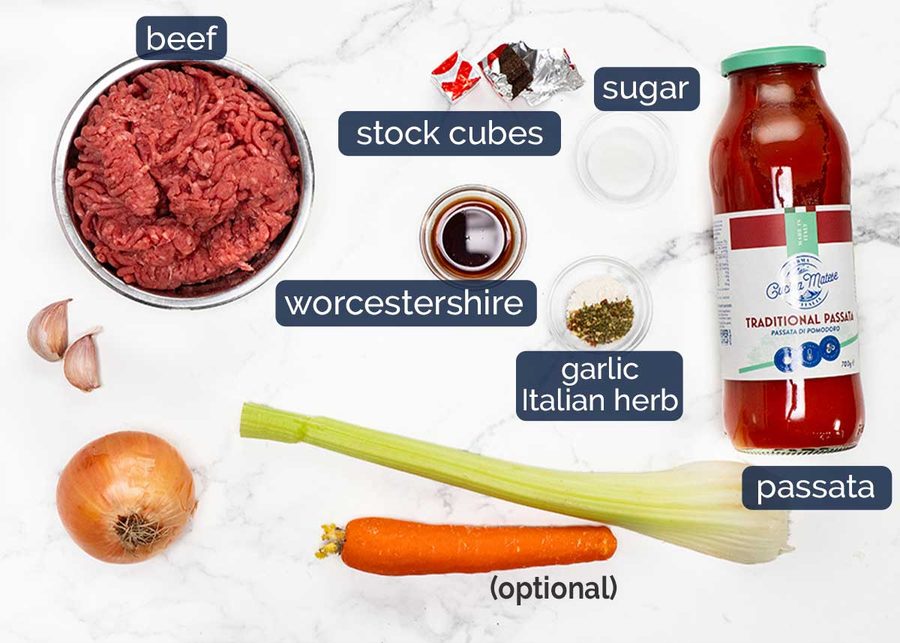
Here’s what you need to make this. The tomato passata does double duty – we use one bottle for the meat sauce and the topping.
1. meat sauce
This is pretty much my bolognese recipe, though I use passata rather than canned tomatoes so we don’t need to simmer long enough for the tomato bits to break down. Carrot and celery are optional. They add flavour (essentially we’re making a soffrito), it fills out the meat sauce and sneaks extra veg into our day, but you don’t need to include them.
-
Beef mince (ground beef) – Any fat percentage is fine though regular rather than lean will make your filling juicier and beefier (fat is where most of the flavour is!).
-
Tomato passata – Pureed, strained pure tomatoes, sometimes labelled “tomato puree” in the US (here’s a photo of Mutti tomato passata sold at Walmart). It’s readily available in Australian supermarkets nowadays, alongside pasta sauces. Passata is excellent for making thick, smooth sauces without the need for simmering time to allow diced canned tomatoes to breakdown. More on tomato passata here.
-
Beef stock cubes (bouillon cubes) – More flavour than salt! Works better than liquid beef stock here which you’d need to reduce a lot for the equivalent amount of flavour without making the sauce too loose. I like OXO brand because it crumbles easily.
-
Sugar – Just 1/2 a teaspoon takes the sour edge off passata. We wouldn’t need this if we were slow cooking for 2 hours!
-
Tomato paste – Forgot to put this in the photo. 🙂 This adds a boost of tomato flavour and helps thicken the sauce.
-
Worcestershire sauce – An essential seasoning for bolognese in my world. 🙂
-
Italian herbs and garlic powder – This is for the tomato sauce topping which we use to cover the top layer of lasagna sheets. Just put it straight into the jar, give it a shake and pour!
-
Garlic and onion – Essential flavour base.
-
Carrot and celery – As mentioned above, these are not essential but I do like to include them.
2. for assembling
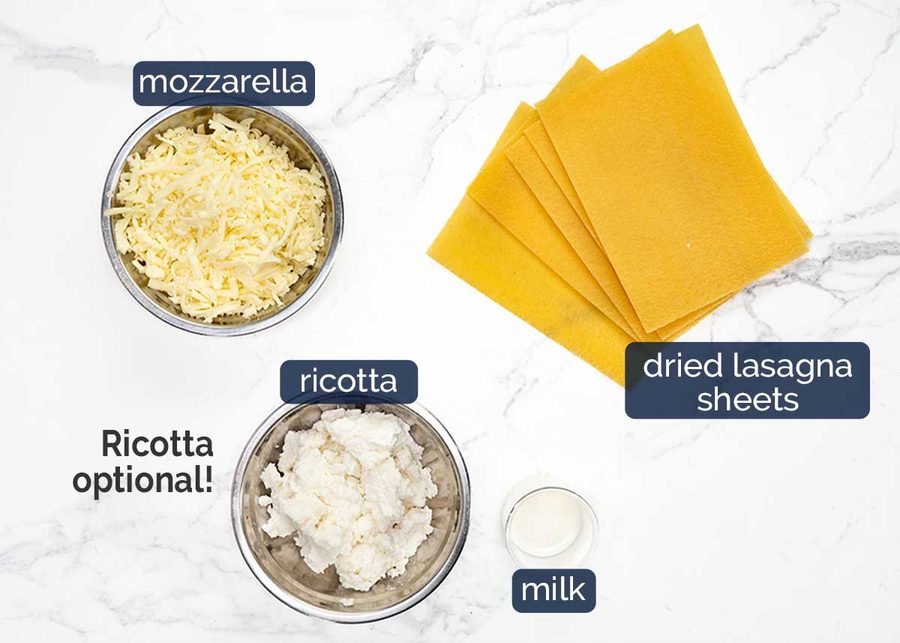
The ricotta dollops are optional! They are a recent addition – a faux cheese béchamel sauce – and the serious rave reviews started after I added it, so I never stopped. But I wouldn’t go out especially to the shops just to get ricotta, unless I was cooking to impress. 🙂
-
Dried lasagna sheets – This recipe is designed for dried lasagna sheets. The meat sauce is slightly looser and there’s a tomato topping, and these provide enough liquid to hydrate and cook the dried lasagna sheets in the oven. You’ll need about 250g/8oz – 7 to 8 sheets, though it will depend on the size. You need enough to cover 3 layers of your skillet.
-
Ricotta – Did you know if you whisk ricotta then it turns into a texture like whipped cream that melts beautifully? 🙂 You need to use a good ricotta to do this – the type sold in baskets in vac packs, or over the counter at delis (Paesanella is my go-to brand). These have a beautiful creamy mouthful compared to the ricottas sold in tubs (like Perfect Italiano and La Stella) which tend to have a slightly powdery texture and little “curds” that remain even when whipped. It will still work though and still taste great! If you can’t find a good ricotta, the next best option is to use smooth ricotta.
-
Milk – Use just a tiny amount if needed to loosen the ricotta.
-
Mozzarella cheese – What is a lasagna without cheese?? 😲
How to make Lasagna in One Pan
As mentioned earlier, the original version I shared back in 2015 only had 2 layers of lasagna sheets and it’s only in recent years I added a third layer. But it’s ok, you don’t have to! You can stick with 2 layers if you want. 🙂
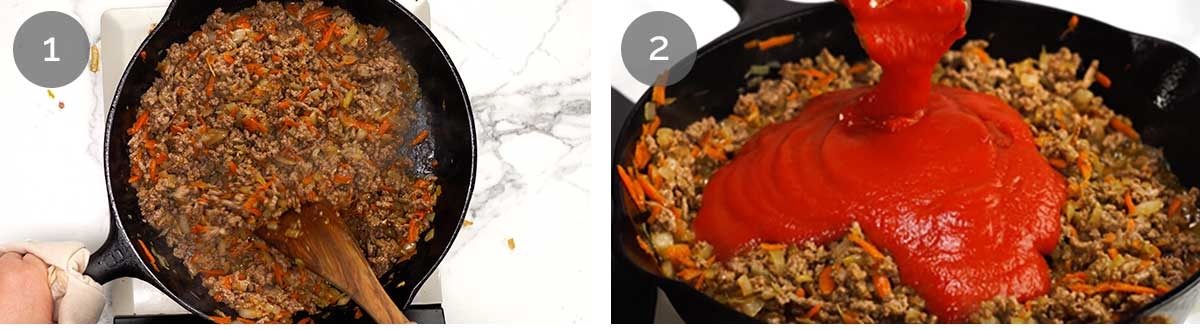
-
Meat sauce – Start by cooking the onion, garlic, celery and carrot (by the way the celery and carrot is grated which is nice and quick). Then add the beef and cook it, breaking it up as you go, until you no longer see raw beef. Do all this on high heat, we’re looking for quick dinner turnaround tonight!
Pan – Use a fry pan / skillet that is around 26 cm wide (rim) and 5 cm deep (10.5″ / 2″). You can go larger, but then it might make sense to make a larger 2 layer one, but don’t go smaller (you’ll regret it when sauce is sloshing all over your stove).
-
Everything else – Add about two-thirds of the bottle of passata (just eye ball it), then everything else for the meat sauce (Worcestershire sauce, water, beef cubes, sugar and salt).
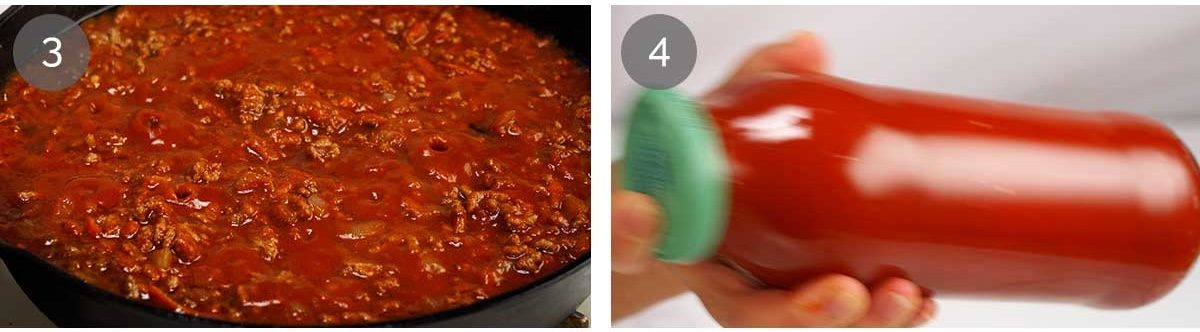
-
Simmer 10 minutes – Give it a good stir then when it starts simmering, lower the stove so it’s simmering gently (not spitting all over your white top). Cook for 10 minutes, stirring every now and then.
-
Shake up sauce – Meanwhile, make the sauce. Just add the Italian herbs, garlic powder, salt and water straight into the remaining passata in the bottle, and give it a good shake. Why aren’t all sauces this easy?? 😉
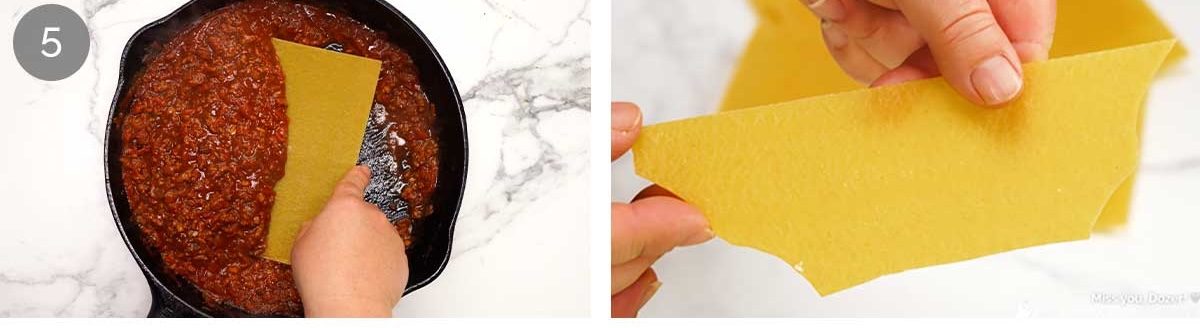
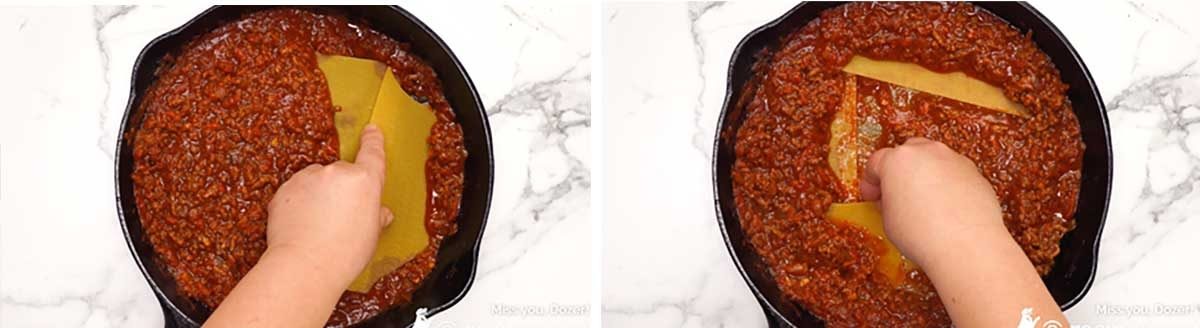
-
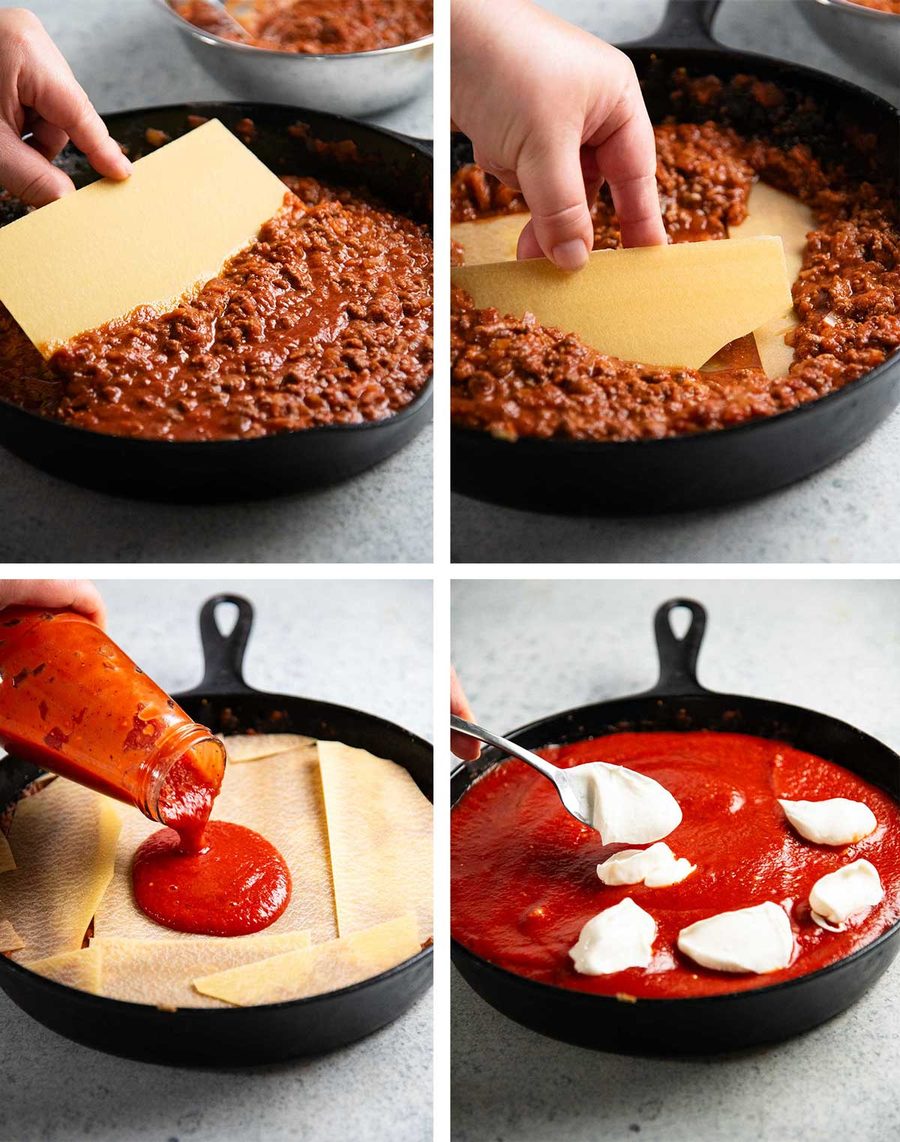
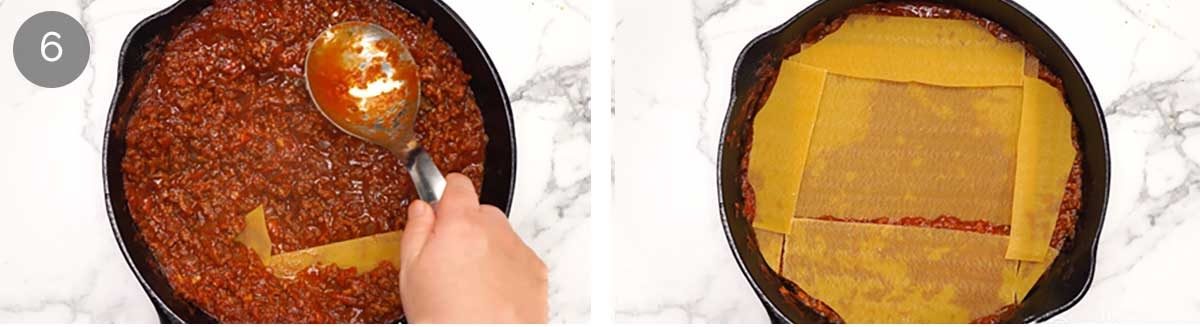
Assemble lasagna – Remove half the meat sauce into a bowl. Then slide the dried lasagna sheets under the meat sauce. I put one whole sheet in the middle then break bits for the edges.
DON’T WORRY IF YOUR LASAGNA SHEET LAYERS AREN’T NEAT AND PERFECT!! They will not be, because those pesky dried lasagna sheets never break exactly where I’m aiming for. 🙂 Expect to create a wonky patchwork situation, aiming for full coverage on each layer, because nobody wants to be that person who ends up with all meat sauce and no lasagna sheets. 😉
-
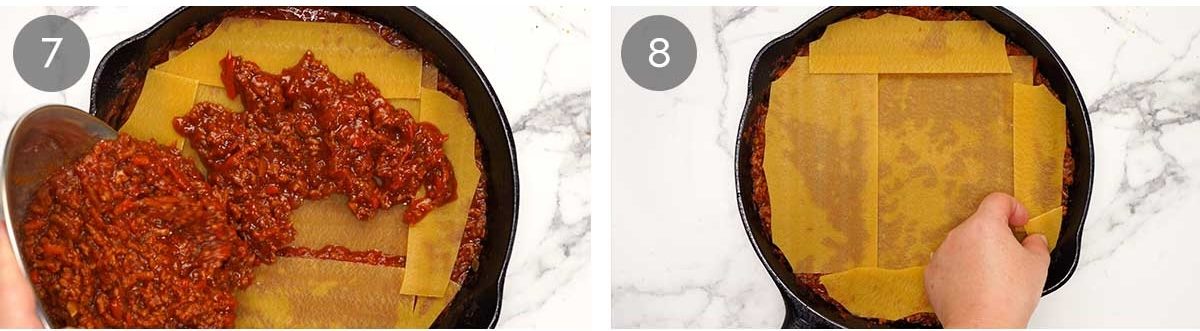
Layer 2 – Spread the meat sauce to cover all the bottom layer of lasagna sheets, then top with another layer of lasagna sheets.
-
Cover with the meat sauce reserved in bowl.
-
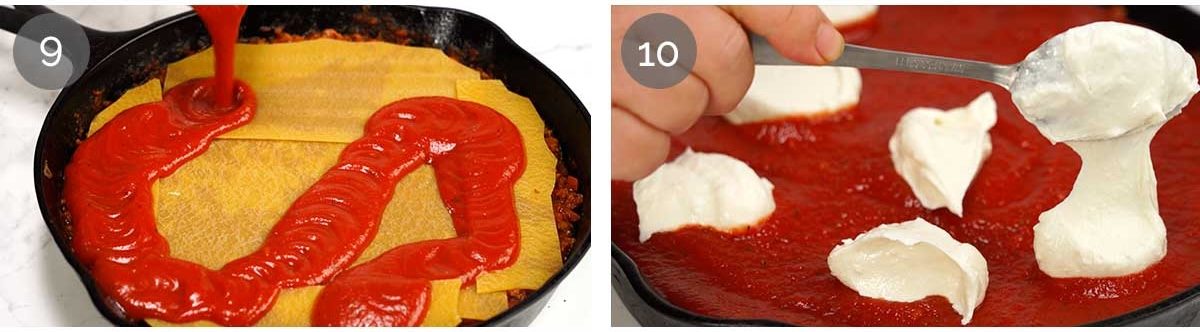
Layer 3 – Then do the final lasagna sheet layer.
-
Sauce – Pour the sauce over the top.
-
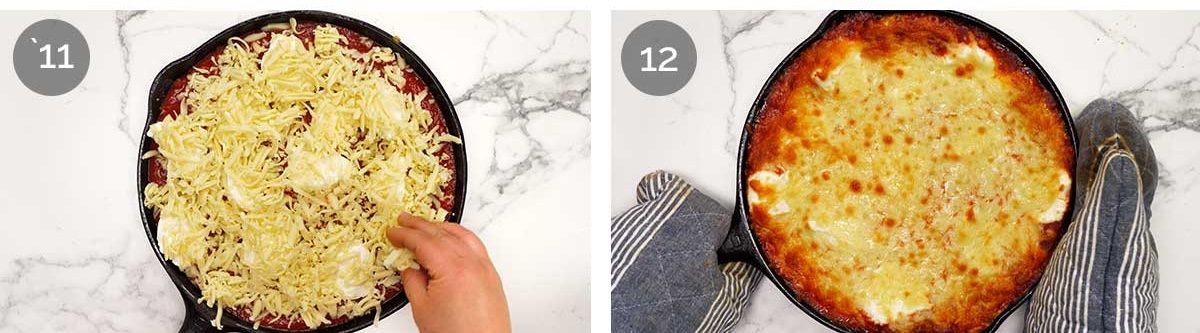
Ricotta dollops – Give the ricotta a vigorous whisk to loosen until it has a whipped cream consistency. You won’t need to do this if using smooth ricotta. Then do 12 or so big dollops across the surface.
-
Cheese – Top with cheese.
-
Bake for 30 minutes uncovered until the cheese is bubbly and there are golden spots on the surface. Let it rest for 10 minutes to stabilise which will make it easier to cut and lift neat(ish) slices out. I make no promises on how perfectly symmetrical and neat your slices will look, lasagna cutting is an art, however, I fully stand behind the deliciousness of every bite!
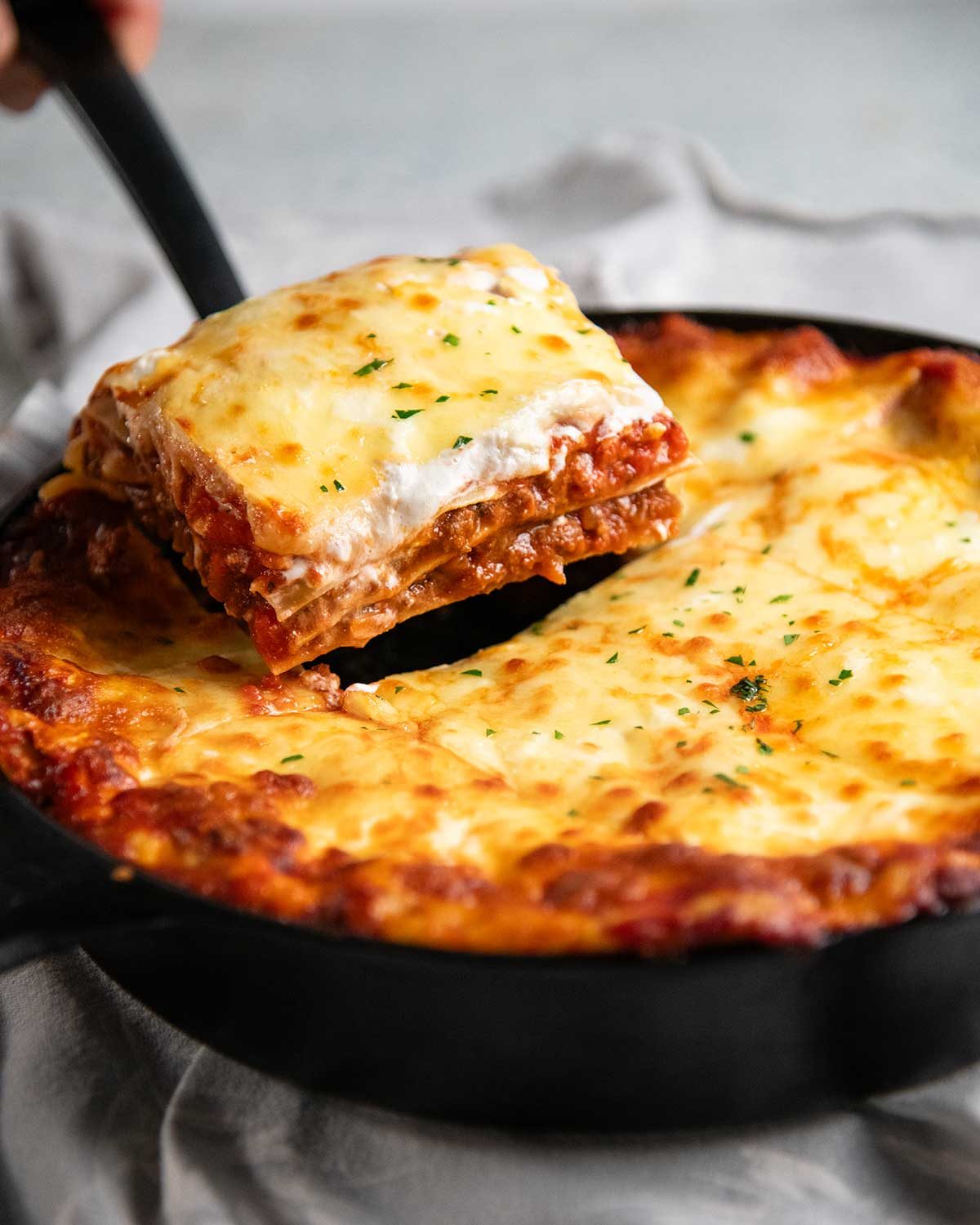
I really feel like this takes not much more effort than a Spag Bolognese, but delivers impressive lasagna results. In recent weeks leading up to sharing this updated version, many people have tried it – friends, family, tradies, even JB (Michelin trained, reminder!!) – and the reviews have been glowing. Even the reader feedback on the original version was enthusiastic (anything dated before today).
So if you’ve loved the original, I really think you’re going to be even more obsessed with this updated version!
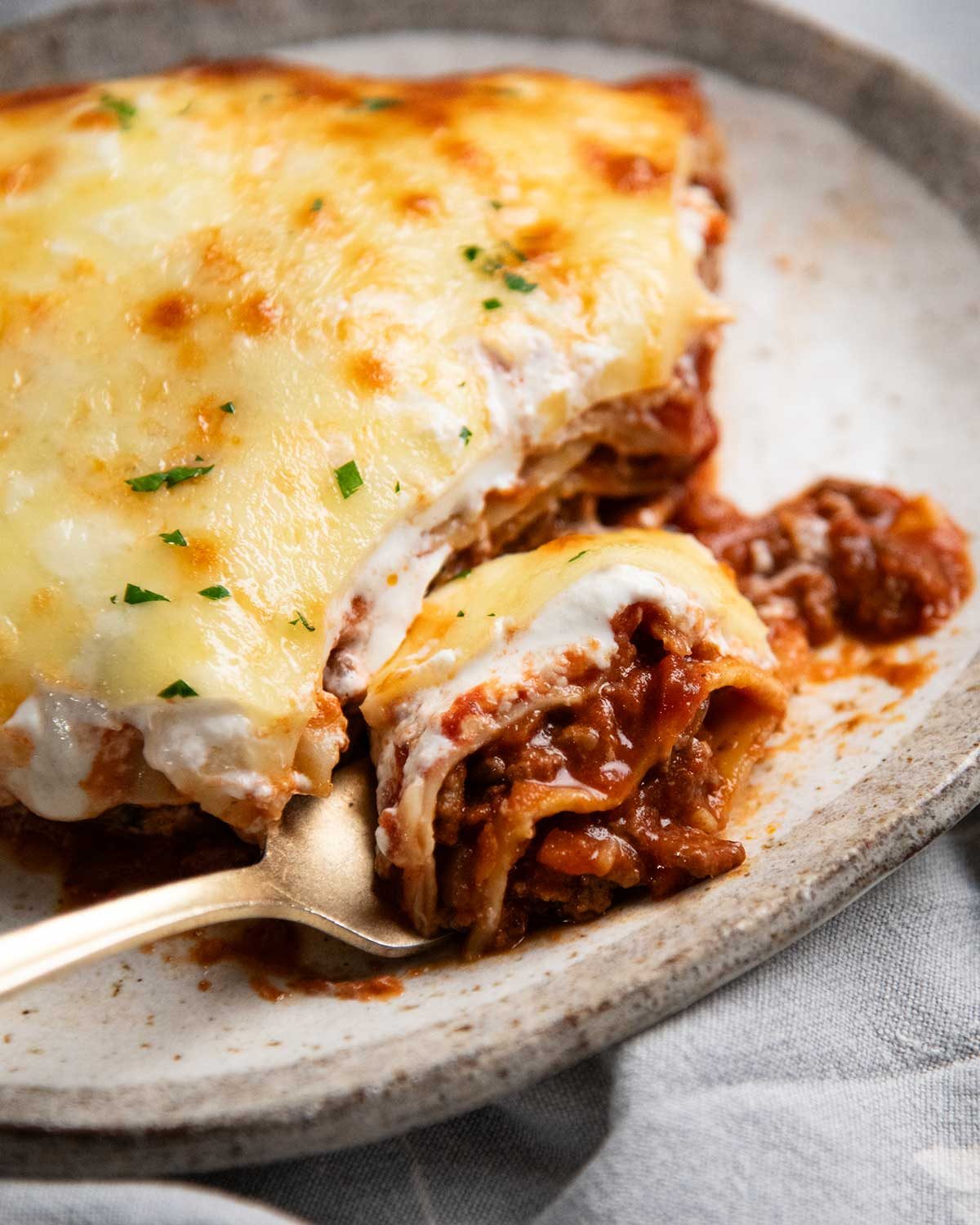
Serve with a simple Garden Salad or make a Big Italian Salad, add a side of Garlic Bread and feel smug as you’re showered with praise for an incredible full-blown lasagna night with barely any of the usual effort. 🥰
Hope you love it! – Nagi x
PS To be clear, this One Pot Lasagna recipe is really, really great for the effort level, but my heart will always belong to a classic proper lasagna. However, I secretly harbour a fear that once you try this one pot version, you may never make it the proper way again….. 😭😭😭
Watch how to make it
Hungry for more? Subscribe to my newsletter and follow along on Facebook, Pinterest and Instagram for all of the latest updates.
One Pot Lasagna
Prep: 20 minutes
Cook: 50 minutes
Resting: 10 minutes
Total: 1 hour 20 minutes
Main
Italian-esque, Western
Servings5
Tap or hover to scale
Ingredients
Topping Sauce flavourings
Creamy ricotta dollops (faux bechamel!) – optional
Prevent screen from sleeping
Instructions
ABBREVIATED RECIPE
-
Meat sauce – Sauté onion, garlic, celery and carrot, cook beef. Add 2/3 bottle of passata + remaining Meat Sauce ingredients, simmer 10 min. Topping Sauce – add everything into remaining passata in bottle, shake. Creamy ricotta – vigorously whisk until it’s like whipped cream. Layer – Remove half meat sauce from pan. Slide lasagna sheets under Meat Sauce (break as needed), then do 2 more layers using reserved meat sauce. Dollop with ricotta, cover with cheese, bake 30 min at 180C/350F (160C). Stand 10 min before cutting.
FULL RECIPE
-
Sauté – Heat olive oil in a deep skillet/pan over medium high heat. (Mine is 26cm/10.5″ wide, 5cm/2″ deep) (Note 5) Add garlic, onion, carrot and celery. Sauté until onion is translucent – about 3 minutes.
-
Cook beef – Turn up heat to high. Add beef and cook, breaking it up with the spatula, until you no longer see red.
-
Sauce – Add about 2/3 of the passata (keep rest for Sauce), and remaining Meat Sauce ingredients. Bring to rapid simmer, then turn down to medium/medium low. Simmer gently for 10 minutes.
-
Preheat oven to 180°C/350°F (160°C fan-forced).
-
Make sauce – Add Sauce Flavourings into the tomato passata bottle and shake to combine.
-
Creamy ricotta (optional) – Put the ingredients in a bowl. Start softening the ricotta using smearing motions with the back of a spoon, then switch to a whisk and give it a vigorous whisk for 20 – 30 seconds until it resembles whipped cream. (If using smooth ricotta, you’ll barely need to do this).
Assemble lasagna (in-post step photos and video are helpful)
-
Remove half filling – Remove the pan from the stove. Remove half the Meat Sauce into a bowl.
-
Base layer – Slide one lasagna sheet, starting from the side, under the Meat Sauce – this will be the base of the lasagna. Break up pieces of lasagne and slide them in under the Meat Sauce around the sides of the pan (to form the remainder of the bottom layer). There is no need to be accurate with coverage here, you can overlap and have gaps. We are making a rustic quick lasagna, remember! Spread the Meat Sauce to cover all the lasagna sheets.
-
Layer 2 – Top with another layer of dried lasagna sheets. Then spread over the Meat Sauce in the bowl.
-
Layer 3 – Cover with a 3rd layer of lasagna sheets.
-
Toppings – Pour over the Sauce and spread over the top. Do 12 – 15 dollops of ricotta across the surface (if using). Sprinkle with cheese.
-
Bake and rest – Bake for 30 minutes uncovered, then set aside for 10 minutes to stabilise a bit.
-
Serve – Sprinkle with parsley (if using), then cut and serve! Enjoy with a simple Balsamic Rocket Salad and Garlic Bread on the side.
Recipe Notes:
US – You can substitute with what you call “tomato sauce” (eg Hunts brand). Australia, you cannot use what we call tomato sauce which is like ketchup, a condiment!
2. Sugar – Just a little touch takes the sour edge of passata, to compensate for not slow cooking this meat sauce for hours upon hours. 🙂
3. Ricotta – Not all ricotta is created equal, my favourite is Paesanella. Good ones are sold over the counter or in baskets in vac packs and once whisked, it becomes all melty like you see in the video and photos. The ones in tubs (like Perfect Italiano) tend to be a bit powdery and though they sort of melt, you get little curds. It still works, and the lasagna as a whole is still delicious, the mouthfeel just isn’t as creamy. Preferable to use a smooth ricotta if you can’t get your hands on a good ricotta. Or just skip it 🙂
4. Lasagna sheetsvary in size depending on the brand, so the number of sheets you need will differ but 250g/8oz in total should be enough. Patch up gaps with broken bits, overlapping parts are fine, don’t worry about how neat your layers are, it’s a rustic quick and easy lasagna after all. 🙂 Just aim for full coverage of each layer!
5. Skillet / pan – It’s fine to use one slightly larger, your lasagna will just be a different height (you might need a few extra sheets for coverage). Don’t try to use a smaller one, you’ll have overflowing issues!
Nutrition per serving, including the ricotta. A lot less than traditional lasagna because we’re using ricotta rather than a rich cheese sauce for the topping!
Nutrition Information:
Serving: 305gCalories: 556cal (28%)Carbohydrates: 49g (16%)Protein: 42g (84%)Fat: 22g (34%)Saturated Fat: 11g (69%)Polyunsaturated Fat: 1gMonounsaturated Fat: 8gTrans Fat: 0.3gCholesterol: 130mg (43%)Sodium: 1532mg (67%)Potassium: 1060mg (30%)Fiber: 5g (21%)Sugar: 10g (11%)Vitamin A: 833IU (17%)Vitamin C: 16mg (19%)Calcium: 329mg (33%)Iron: 5mg (28%)
Original recipe published February 2015, upgraded as described in the post. But most importantly, the original recipe was published before I started including the Life of Dozer section. So of course, I had to add him. ❤️
Remembering Dozer
Dozer’s size was a bit of a talking point. I used to describe him as a small horse!! Plus, I’m a bit….err….vertically challenged. These photos are totally true to scale. 😆
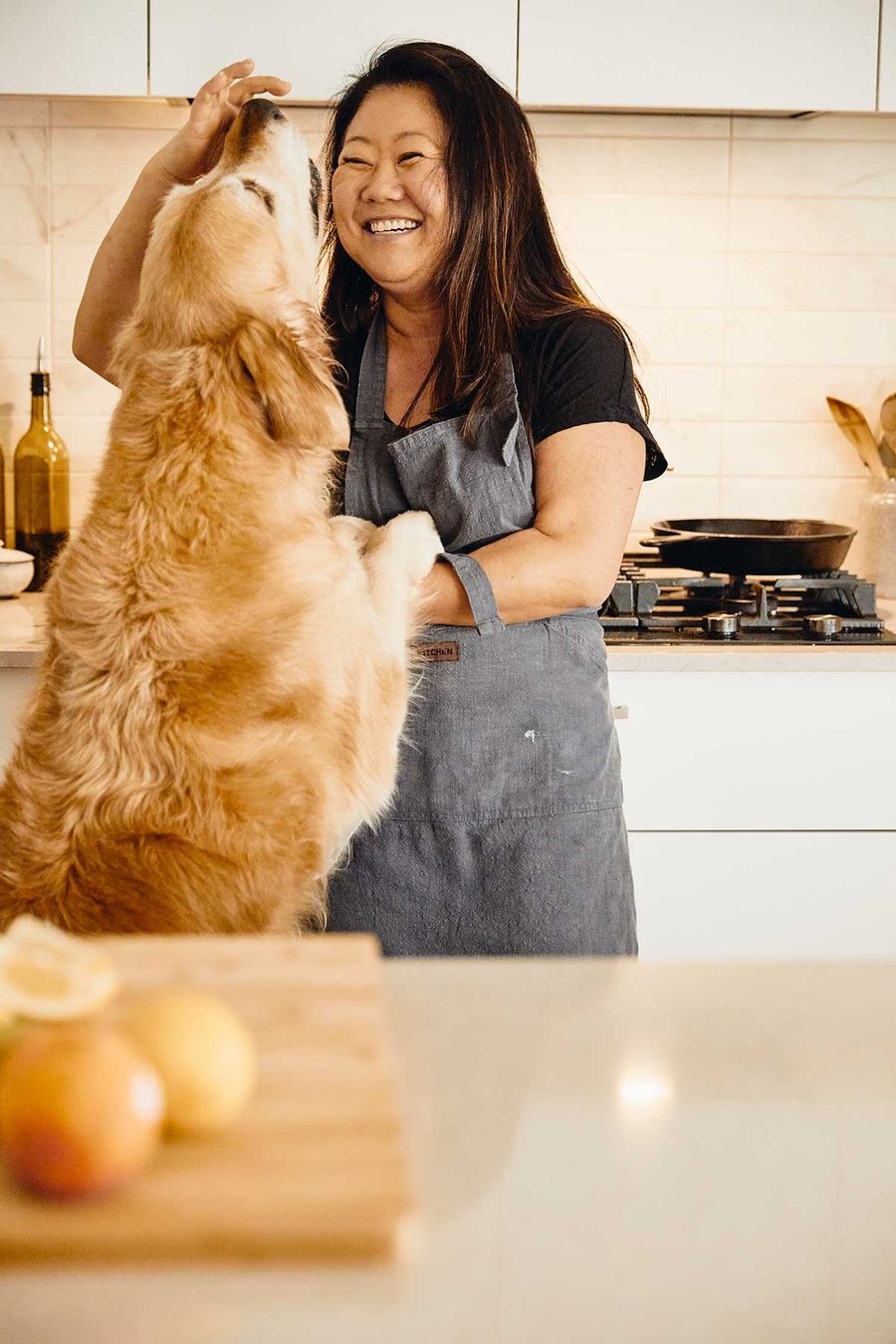

And yes, the question “who walked who??” was genuinely valid! 😅

PakarPBN
A Private Blog Network (PBN) is a collection of websites that are controlled by a single individual or organization and used primarily to build backlinks to a “money site” in order to influence its ranking in search engines such as Google. The core idea behind a PBN is based on the importance of backlinks in Google’s ranking algorithm. Since Google views backlinks as signals of authority and trust, some website owners attempt to artificially create these signals through a controlled network of sites.
In a typical PBN setup, the owner acquires expired or aged domains that already have existing authority, backlinks, and history. These domains are rebuilt with new content and hosted separately, often using different IP addresses, hosting providers, themes, and ownership details to make them appear unrelated. Within the content published on these sites, links are strategically placed that point to the main website the owner wants to rank higher. By doing this, the owner attempts to pass link equity (also known as “link juice”) from the PBN sites to the target website.
The purpose of a PBN is to give the impression that the target website is naturally earning links from multiple independent sources. If done effectively, this can temporarily improve keyword rankings, increase organic visibility, and drive more traffic from search results.
Comments are closed, but trackbacks and pingbacks are open.